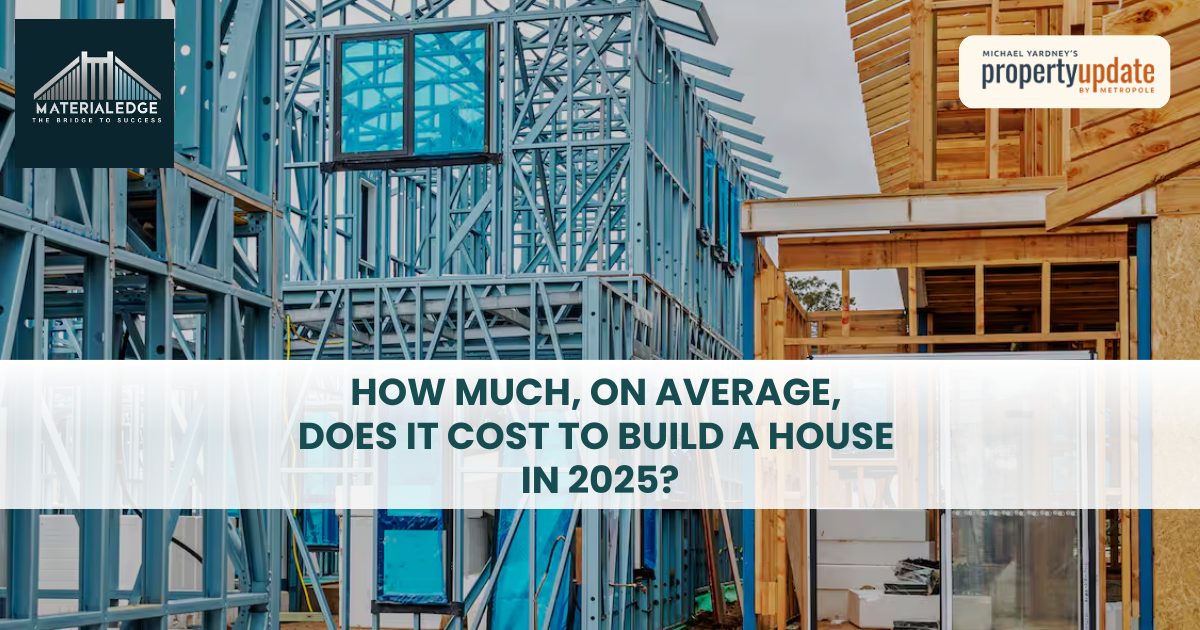

According to the latest data, the average cost of building a house in Australia is approximately AUD 443,422 (equivalent to more than VND 7 billion). However, this figure represents only the national average and can vary significantly depending on the type of home, location, and level of finish.
Current build cost benchmarks (Australia-wide)
Across Australia, the average cost to build a detached house now ranges from approximately AUD 1,900 to AUD 3,900 per square metre. The final price varies significantly depending on several factors, including the state or city where the project is located, the level of architectural finish, and whether the home is built by a volume builder or a custom builder.
For a standard detached house of around 200 m², the typical build cost alone can range from approximately AUD 380,000 to AUD 780,000. These figures represent the construction cost only and do not include land acquisition or other associated development costs.
Major cost drivers
Several structural factors are contributing to the continued rise in construction costs across Australia.
One of the most significant challenges is the shortage of skilled labour, which has pushed wages higher while also causing project delays. At the same time, material price inflation continues to affect key construction inputs such as steel, timber, concrete, and glazing.
Site conditions also play a major role in determining the total project cost. Factors such as earthworks requirements, land slope, and soil classification can add substantial expenses before construction even begins.
Another contributor is design inefficiency. Bespoke architectural designs that lack repetition often increase engineering complexity and slow down construction. Low standardisation typically leads to longer build times and higher costs.
 Source: Ray White
In addition, time overruns in traditional construction frequently increase project costs. Extended timelines raise preliminary expenses and increase financing costs through interest and holding expenses.
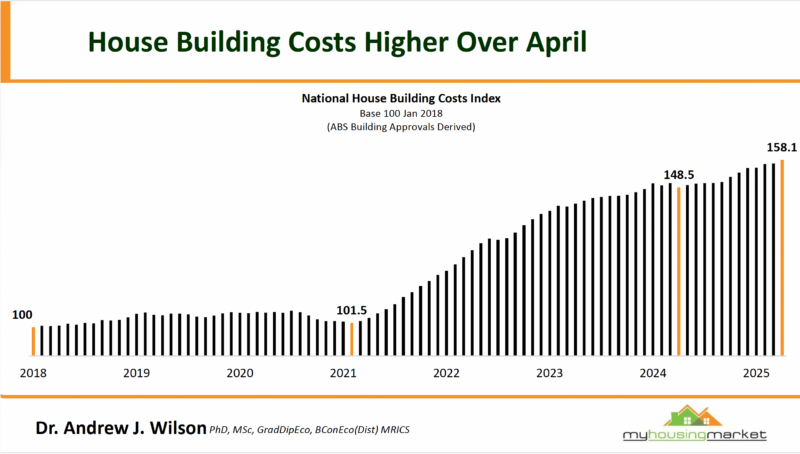
Source: Dr. Andrew J. Wilson
The industry has also experienced increasing structural pressure in recent years. Labour shortages, global supply chain disruptions, and extreme weather events have created a challenging operating environment for builders across Australia. As a result, several construction companies have collapsed, forcing surviving builders to price projects more cautiously and include higher risk margins in their contracts.
What’s NOT included in headline build prices
Many homeowners and first-time developers underestimate the total cost of building because several important items are typically excluded from advertised construction prices.
These hidden costs often include site works and service connections, upgrades required for BASIX or NatHERS compliance, council approval and planning fees, as well as landscaping, fencing, and driveway construction.
Another major source of budget blowouts comes from upgrade variations, where homeowners modify specifications during the construction process. These changes can quickly increase the final cost of the project.
In addition, recent updates to Australia’s residential building codes — including stricter requirements for energy efficiency and liveability standards — have further increased the cost of new housing projects. Industry estimates suggest that these regulatory changes alone can add around AUD 30,000 to the cost of building an average home.
The critical insight
One of the most important insights highlighted in the analysis is that time equals money in construction.
Traditional building methods typically require 9 to 18 months to complete a residential home, exposing projects to several financial risks. These include construction cost escalation during the build period, the potential risk of builder insolvency, and prolonged pressure on project cash flow due to extended financing periods.
As construction timelines increase, projects become more vulnerable to market volatility and supply chain disruptions.
Industry estimates suggest that materials typically account for around 40–45% of the total construction cost, while labour contributes approximately 35–40%. The remaining costs include taxes, insurance, regulatory compliance, project overheads, and builder profit margins that often range between 15–20%.
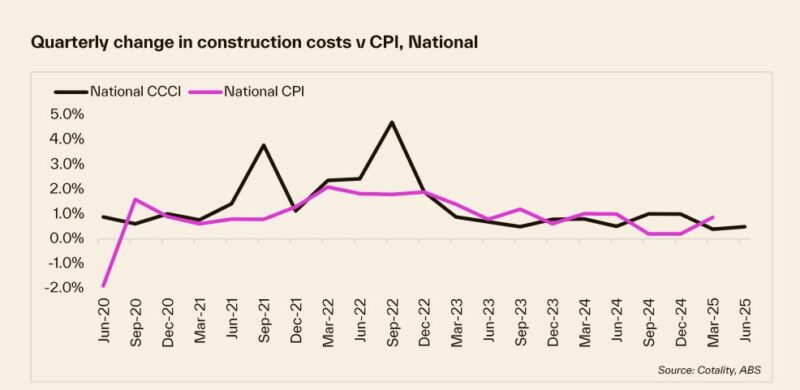
Source: Cotality
How This Directly Connects to AusMod 20K
The challenges identified in the article align directly with the structural problems that the AusMod 20K housing program aims to address.
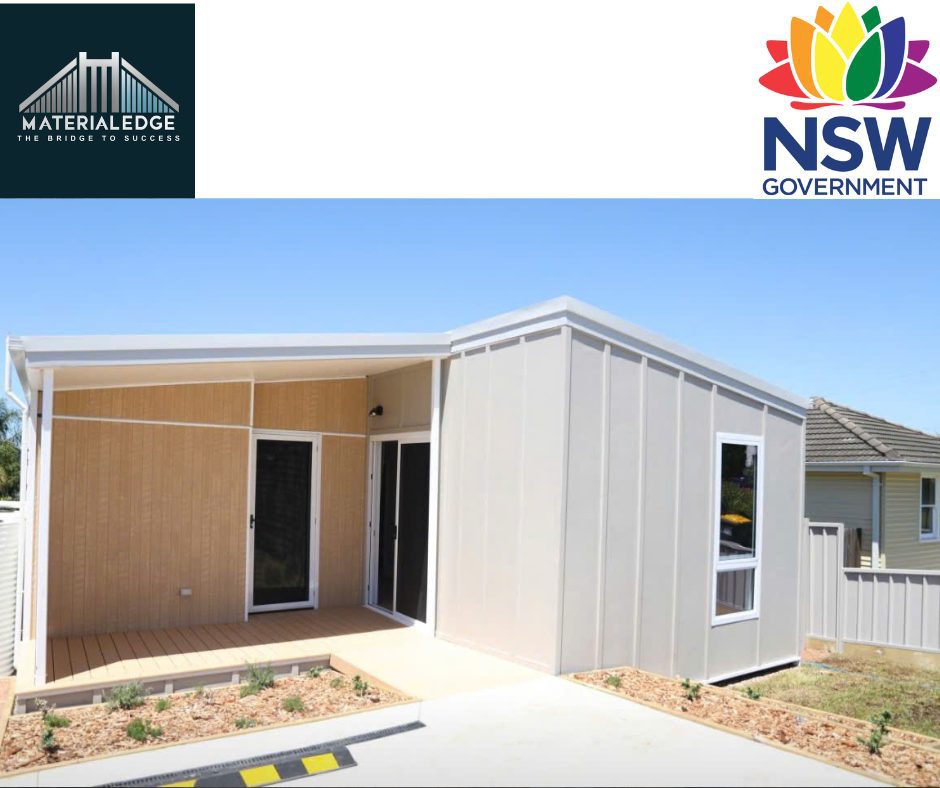
AusMod 20K focuses on standardised, repeatable modular housing typologies, which significantly reduce the inefficiencies associated with bespoke design. By standardising housing components, the program enables faster and more predictable construction.
The program also relies heavily on offsite manufacturing, which can reduce on-site labour dependency by up to 50 percent. Moving production into controlled factory environments improves productivity while reducing the risks associated with labour shortages and weather delays.
Another major advantage is the compressed delivery timeframe. Modular housing developed under the AusMod 20K framework can typically be delivered within 12 to 20 weeks, compared with the 12 to 18 months required by traditional construction.
Cost certainty is another key benefit. Factory-based production with clearly defined specifications helps minimise variation costs, which are one of the most common causes of budget overruns in conventional building projects.
Finally, the scale of the program plays an important role. AusMod 20K targets the delivery of 20,000 homes, enabling economies of scale that can significantly reduce per-unit construction costs.
By combining standardised design, offsite manufacturing, and large-scale production, the AusMod 20K model enables lower cost per square metre, reduced development risk, and far more predictable project delivery—precisely the areas where traditional construction is currently struggling.
How Aura Modular Solves the “Hidden Cost” Problem
Aura Modular translates the AusMod 20K framework into a commercially deployable product:
Within the AusMod 20K framework, Aura Modular converts the program into a commercially deployable housing product.
Compared with traditional construction, Aura Modular offers several key cost advantages. The system provides turnkey modular pricing, where both structural components and internal fit-outs are priced upfront. This significantly reduces the hidden costs that often appear during traditional construction projects.
Because most modules are manufactured offsite, site exposure is minimal, reducing preliminary costs, scaffolding requirements, and delays caused by weather conditions.
Shorter construction timelines also mean a shorter financing period, which reduces interest expenses and allows developers or homeowners to achieve occupancy or rental income much sooner.
Additionally, fixed specifications aligned with the National Construction Code (NCC) minimise variation risks and improve compliance efficiency.
Strategic positioning
Aura Modular does not compete with traditional builders purely on craftsmanship. Instead, it delivers a different value proposition based on four key advantages:
- Speed
- Cost certainty
- Risk reduction
- Program-scale delivery
Strategic Conclusion (For Developers & Investors)
The data highlighted in the article confirms a critical reality in today’s housing market:
Traditional construction costs are no longer simply high—they are volatile and difficult to predict.
Programs such as AusMod 20K, supported by modular housing solutions from Aura Modular, provide a structural response to this challenge. By industrialising housing delivery, eliminating time-based cost leakage, and enabling scalable and finance-friendly housing development, modular construction is increasingly positioned not just as an alternative—but as a necessary evolution of Australia’s housing delivery model.
If you would like to
Become a partner of the AUSMOD20K program, please click this link: Partner
Become a supplier for the AUSMOD20K program, please click this link: Supplier
See detailed information at: NEWS